Copyright · usage · licensing
Corporate Photography Usage Rights & Licensing Guide India
“Can we use these photographs everywhere?” is a scope question, not a footnote. Corporate teams should understand who can use the files, where, for how long and under which agreement.
A practical planning page built around how the final photographs or films will actually be used.
What strong briefs get right
Four decisions that improve the final visual library.
These are the recurring signals we found across specialist pages, official guidance where relevant, and TAT’s own corporate production experience.
Define the purpose
Consent, privacy, copyright and confidentiality questions depend on what is captured and how it will be used.
Write restrictions down
Do not rely on a verbal “please avoid this room” when access is sensitive.
Separate access from usage
Permission to photograph an event is not automatically permission for every later marketing use.
Build controlled delivery
Private galleries, approved recipients, embargoes and deletion requests need operational handling, not just policy wording.
Planning sequence
A useful production process is simple enough to follow under pressure.
The workflow changes by assignment, but the order matters: define the use first, then engineer capture and delivery around it.
Scope
Define what may and may not be photographed.
Access
Confirm permissions, restricted rooms and approved recipients.
Capture
Work to the agreed boundaries without improvising around sensitive material.
Review
Apply any approval or embargo workflow agreed in advance.
Deliver
Use controlled folders, clear naming and agreed retention or deletion rules.
Add first-party proof
Use images that explain something, not placeholders that merely look good.
Both slots stay hidden until Codex or WordPress replaces the comment with a real image, video or iframe.

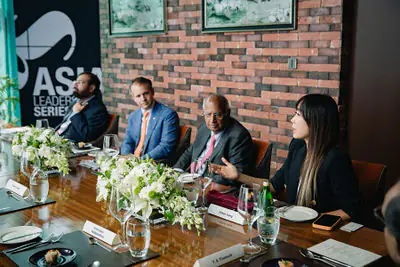
Suggested media 2: A simple rights matrix graphic for internal, PR, social, advertising and third-party use.
TAT field note
The intended use should change how we photograph.
Usage is not only a contract issue; it affects composition and production.
Corporate images from TAT assignments often need to work across press, LinkedIn, internal communications, speaker profiles and client archives.
When the photographer knows the likely channels, the crew can create useful orientations and negative space instead of handing the designer one inflexible frame.
A clear usage conversation improves both the paperwork and the photographs.
Decision table
Translate the brief into production decisions.
Use this as a conversation starter with communications, HR, PR, event, AV or brand teams.
| Decision | What good planning looks like | Common failure | TAT recommendation |
|---|---|---|---|
| Capture permission | Who may be photographed | Assuming attendance equals unlimited marketing consent | Use event notices/consent processes appropriate to the organisation. |
| Sensitive content | Restricted slides, rooms or people | Capturing confidential screens by accident | Provide a clear do-not-capture list and room map. |
| Distribution | Approved channels and recipients | Forwarding assets beyond the agreed group | Use controlled delivery and written usage guidance. |
| Retention | How long files should be kept | Indefinite copies across personal devices | Agree practical storage and deletion handling. |
How we think about the work
Useful beats decorative.
The photograph is not finished when the shutter closes. It is finished when another team can actually use it: in a press release, annual report, website, LinkedIn post, investor deck or internal story without having to decode what happened.
Agree the real business use and priority people.
Watch what happens between the scheduled moments.
Deliver an organised set another team can immediately understand.
Build a useful first brief.
No visible line-item pricing. This tool simply packages the decisions that most affect scope and sends them to TAT.
Continue planning
Related Tell-a-Tale Studios pages.
These links move from the planning question into the most relevant service or portfolio context.
Research-informed page: the source map supplied with this pack lists the live specialist/official pages reviewed for this topic. Competitor claims are not copied into this page.
People Also Ask
Direct answers before you request a quote.
The questions are written conversationally so they work for human buyers and answer engines without hiding the practical caveats.
01Who owns commissioned corporate photographs in India?
Indian copyright law includes specific provisions for commissioned photographs and also allows agreement terms to matter. Organisations should review their actual contract and obtain legal advice where ownership is important.
02Can our PR agency use the delivered photographs?
That should be addressed in the agreed usage scope, especially where agencies or other third parties will distribute or repurpose the files.
03Can speakers download and use their event photographs?
The event owner should decide whether individual speakers receive reuse rights and under what conditions.
04Is website use the same as paid advertising use?
Not always. Commercial agreements can distinguish owned channels, PR/editorial distribution and paid campaigns.
05Does receiving high-resolution files mean unlimited usage?
File resolution and legal usage are separate concepts. The written agreement should define permitted use.
06Does TAT provide legal advice on licensing?
No. TAT can explain its production and delivery terms; complex legal questions should be reviewed by qualified counsel.
Share the brief. We will recommend the smallest team that can do it properly.
Send the date, location, timings, audience, priority stakeholders, intended use and delivery deadline.